

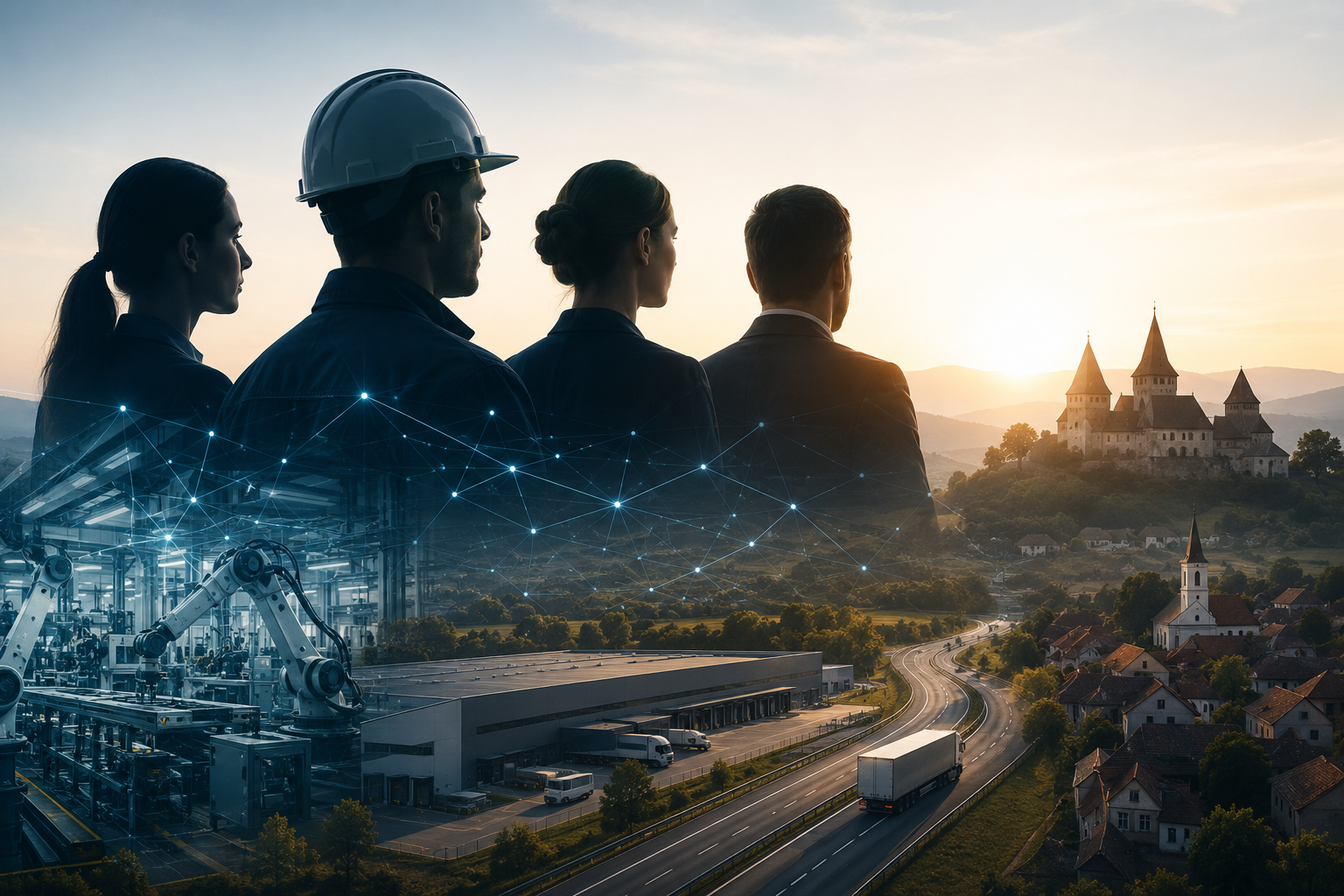
Romania's Workforce: The Competitive Advantage Investors Can't Afford to Ignore
For years, Romania has been known as a destination for competitive industrial land, modern logistics facilities and strategic access to Central and Eastern Europe. Today, however, another advantage is becoming increasingly important: people.
Across Europe, many industries are entering a period of transformation. The automotive sector, once considered one of Europe's strongest growth engines, is facing slowing demand, electrification challenges, increasing competition from Asia and constant pressure to improve efficiency. Manufacturers and suppliers are restructuring, consolidating operations and searching for ways to remain competitive without compromising quality.
This creates an important question for every investor:
Where can we reduce costs without reducing performance?
Romania is becoming one of the strongest answers.
Cost Efficiency Beyond Real Estate
Lower property costs have always attracted manufacturers to Romania, particularly in Transylvania. Industrial land, warehouses and production facilities remain significantly more affordable than in Germany, Austria, the Netherlands or Northern Italy.
But the conversation should no longer stop at real estate.
The real opportunity lies in combining competitive property costs with a highly capable workforce.
Romania continues to produce thousands of engineers, software developers and technical specialists every year. Universities in Cluj-Napoca, Sibiu, Brașov, Târgu Mureș and Timișoara have built strong reputations for technical education, while generations of manufacturing experience have created a workforce that understands industrial production, automation and quality standards.
For investors, this means access to qualified employees without the salary levels seen across much of Western Europe.
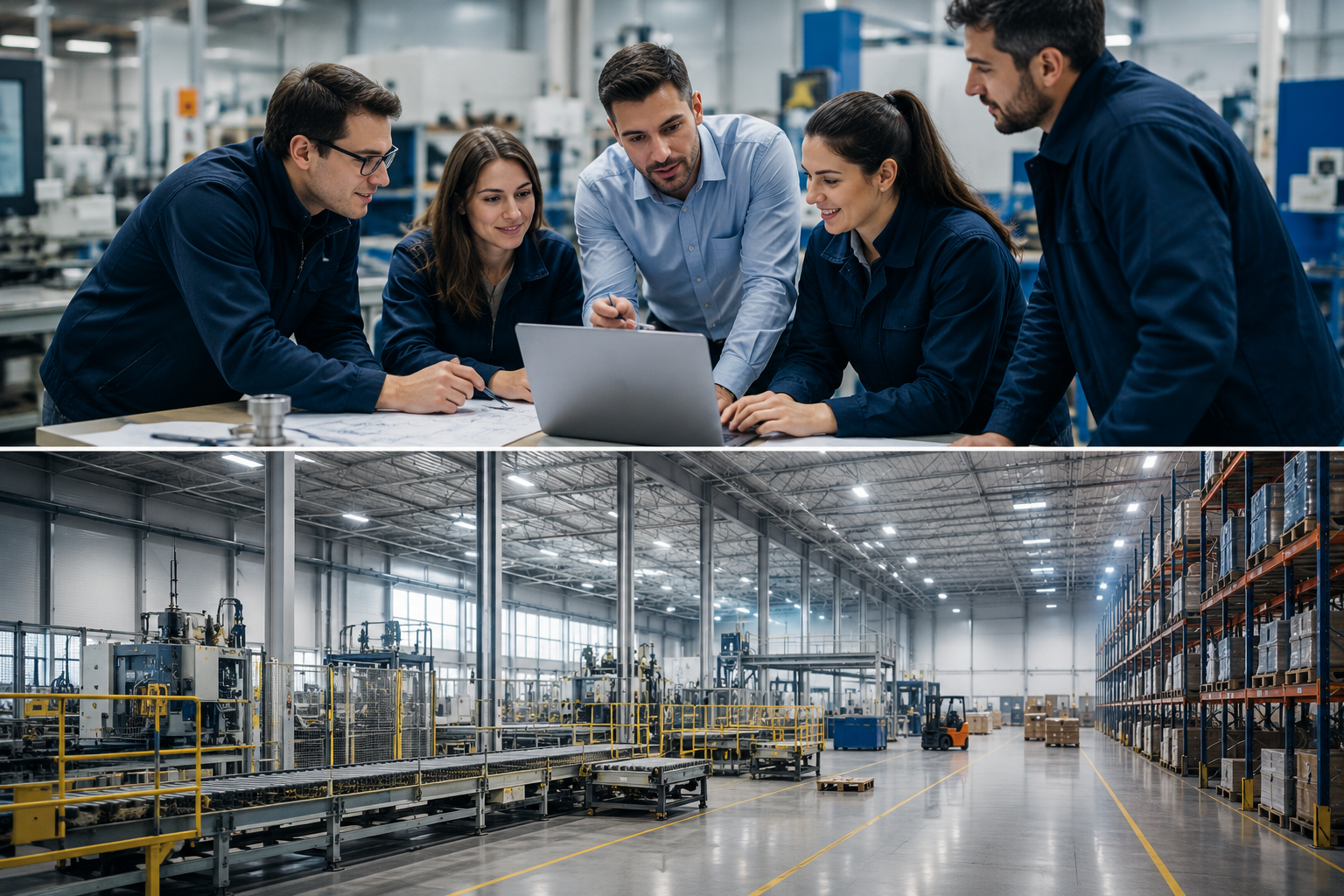
AI Isn't Replacing Talent. It's Multiplying It.
Artificial intelligence is changing how companies operate.
Routine tasks are increasingly automated, while employees are expected to generate more value through technical knowledge, process optimisation and digital skills.
Romania is particularly well positioned for this transition.
The country's strong IT ecosystem has produced professionals who adapt quickly to new technologies and increasingly support manufacturing, logistics and engineering operations. Instead of viewing AI as a threat, many Romanian specialists are using it as a productivity multiplier.
For international companies, this creates an attractive combination:
Lower operating costs.
Highly adaptable employees.
A growing digital mindset.
Why This Matters for Industrial Investors
When companies evaluate expansion or relocation, labour costs remain one of the largest long-term operational expenses.
A warehouse may represent a one-time investment.
Employees represent an ongoing investment for years or decades.
Choosing the right location therefore means looking beyond the purchase price of industrial land.
It means understanding where your future workforce will come from, how quickly you can recruit, how stable the labour market is and whether your business can continue growing five or ten years from now.
This is exactly where many regions in Transylvania stand out.
Cities such as Sibiu, Brașov, Alba Iulia, Târgu Mureș and Oradea combine technical education, industrial tradition, modern infrastructure and excellent connections to Western Europe. They continue attracting international manufacturers while maintaining operating costs that remain competitive within the European Union.
The Next Competitive Advantage
The companies that succeed during periods of uncertainty are rarely those that simply cut costs.
They are the ones that optimise intelligently.
Romania offers an opportunity to do exactly that.
Competitive industrial real estate.
Skilled technical professionals.
A growing digital economy.
European Union membership.
Excellent access to regional markets.
For businesses reconsidering their manufacturing footprint, expanding logistics operations or establishing new engineering and shared service centres, Romania deserves to be part of the conversation.
The question is no longer whether Romania is a low-cost destination.
The better question is whether it has become one of Europe's highest-value destinations.
Nearshoring Is No Longer a Trend. It's a Strategy.
European businesses are also rethinking geography.
Global supply chain disruptions exposed the risks of relying on production located thousands of kilometres away. Today, many manufacturers are actively exploring nearshoring—moving production closer to customers while remaining inside or close to the European Union.
Romania fits naturally into that strategy.
EU membership provides regulatory stability and access to the single market.
Its location offers efficient transport links to Central and Western Europe.
Modern motorway infrastructure continues to expand, while logistics corridors connecting Germany, Austria, Hungary and the Balkans make Transylvania an increasingly attractive manufacturing hub.
For companies seeking resilience as much as efficiency, geography has become another competitive advantage.