

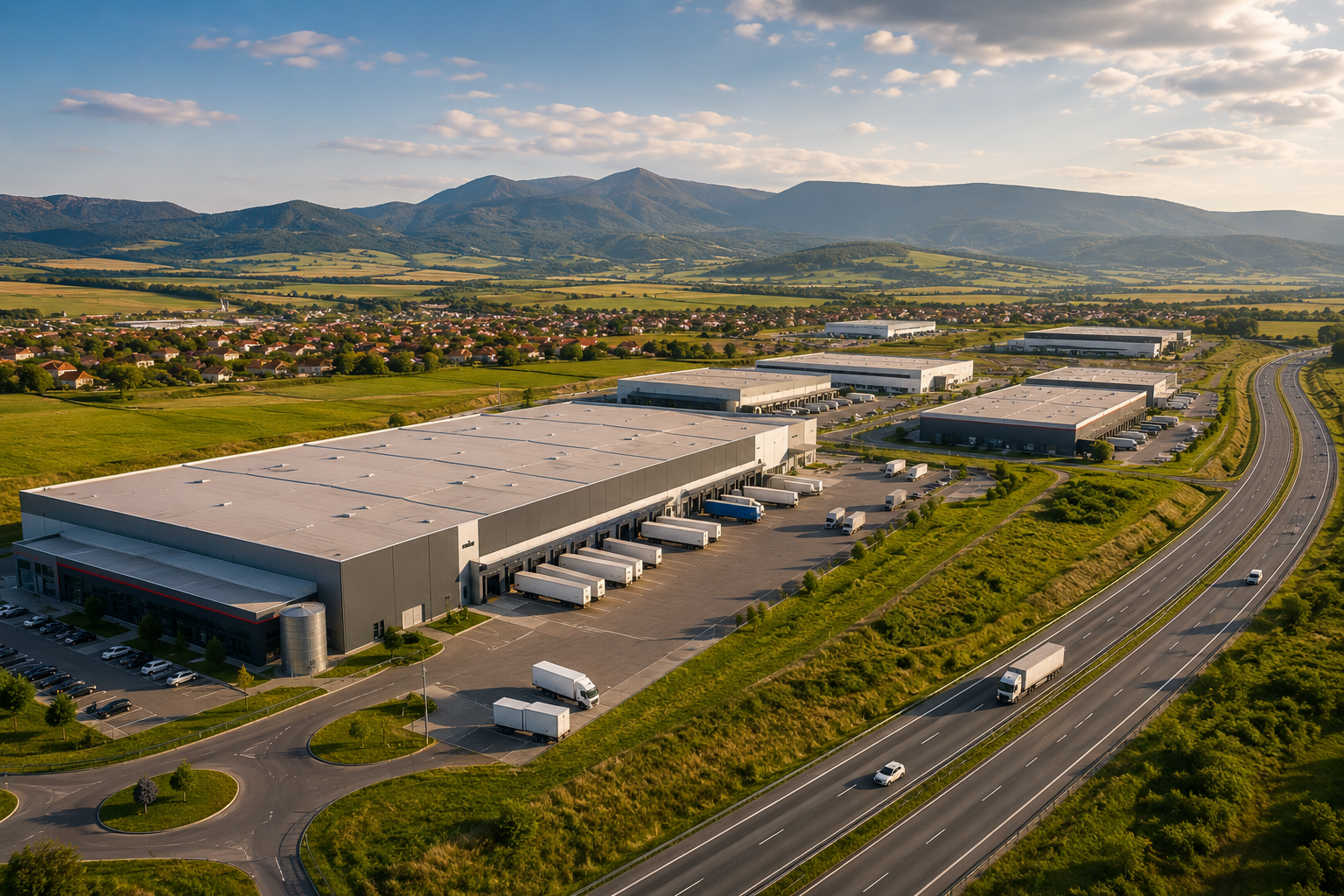
Why Europe's Cost-Cutting Strategies Are Creating New Opportunities in Transylvania
Smart companies aren't just reducing costs—they're choosing smarter locations.
For years, cost-cutting meant one thing: moving production to the cheapest possible location.
Today, that strategy is no longer enough.
European businesses are facing a very different reality. Rising labour costs, economic uncertainty, increasing energy prices, stricter regulations and global competition are forcing manufacturers to rethink not only how they operate, but where they operate. Add artificial intelligence, supply chain resilience and the need for skilled talent to the equation, and the decision becomes far more complex than simply comparing wage levels.
The question companies are asking today isn't "Where is labour the cheapest?"
It's "Where can we build a competitive business for the next decade?"
Increasingly, the answer is leading investors towards Central and Eastern Europe—and Romania is becoming one of the most attractive destinations.
Cost Cutting Has Become a Long-Term Strategy
The restructuring taking place across Europe's automotive sector tells an important story.
For decades, European manufacturers expanded steadily, investing in larger facilities and increasingly complex supply chains. Today, many of those same companies are reviewing their operations. Some are consolidating production, others are relocating certain activities closer to strategic markets, while many suppliers are searching for ways to reduce operating costs without compromising quality.
This isn't a temporary reaction to market conditions.
It's a structural shift.
Businesses have realised that long-term competitiveness depends on building leaner, more flexible operations that can adapt to changing economic conditions.
That is where location becomes a strategic decision rather than simply a real estate transaction.
Why Romania Is Part of the Conversation
Romania offers something many European markets struggle to combine: competitive operating costs with a highly skilled workforce.
Industrial land, warehouses and production facilities remain significantly more affordable than in many Western European countries. Labour costs are also considerably lower, while the country continues to produce thousands of engineers, IT specialists and technical graduates every year.
Cities such as Cluj-Napoca, Sibiu, Brașov, Alba Iulia, Timișoara and Oradea have developed strong industrial ecosystems supported by technical universities and decades of manufacturing expertise.
For companies looking to optimise costs without sacrificing capability, that combination is increasingly difficult to ignore.
The AI Era Makes Talent Even More Valuable
Artificial intelligence is changing how businesses operate, but it is not eliminating the need for skilled people.
Instead, it is increasing the value of employees who can combine technical expertise with digital tools.
Romania has long been recognised for its strong IT sector, and that experience is now benefiting manufacturing, logistics and industrial operations. Engineers, software developers and automation specialists are helping companies improve efficiency, optimise production and integrate new technologies into existing processes.
The result is not simply lower costs.
It is higher productivity.
For investors, that distinction matters.
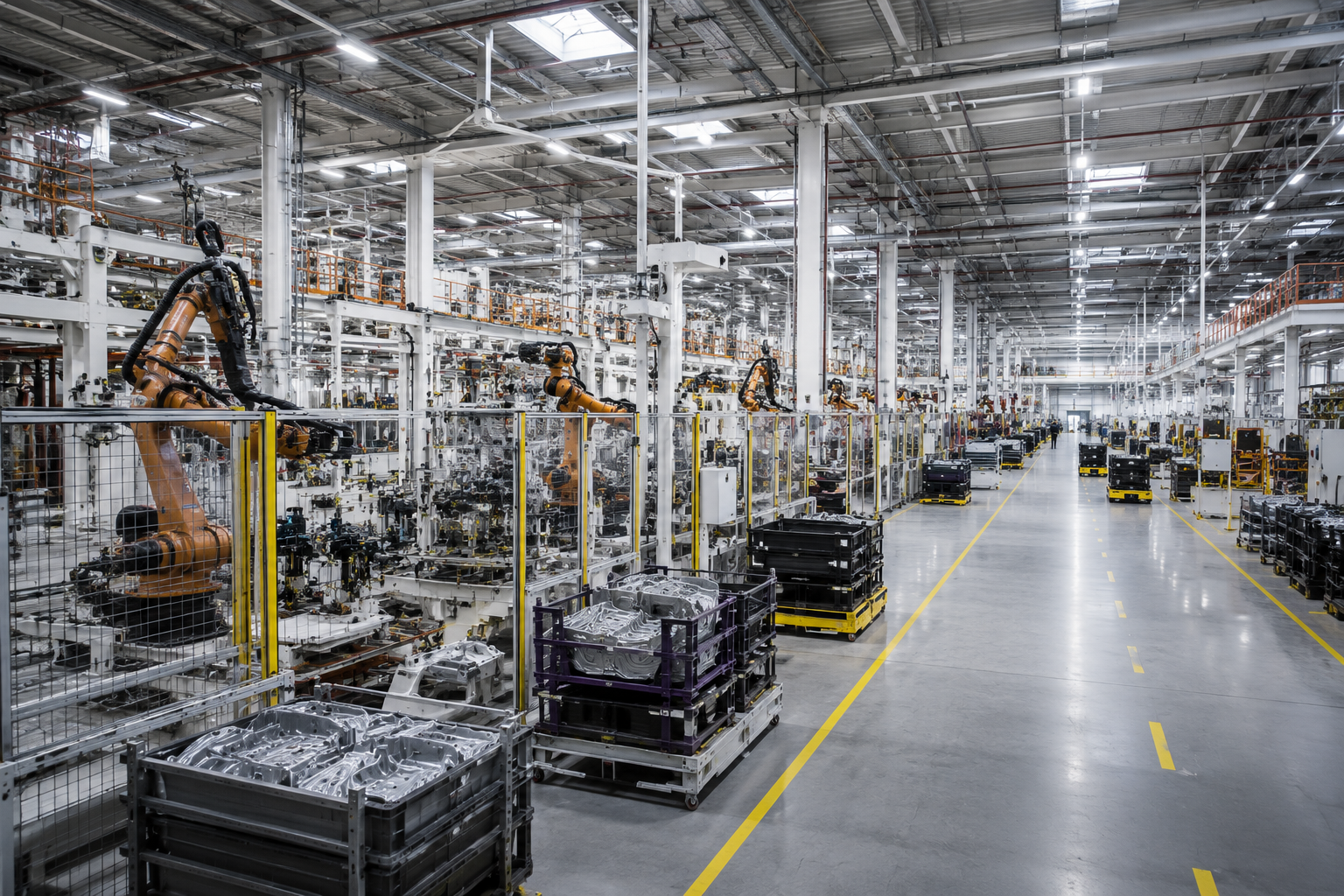
Nearshoring Is Reshaping Europe
Recent years have exposed the risks of depending entirely on distant supply chains.
Manufacturers increasingly want production closer to customers, suppliers and major transport corridors. This trend—commonly referred to as nearshoring—is continuing to reshape investment decisions across Europe.
Romania's location provides a significant advantage.
As a member of the European Union, it offers regulatory stability, access to the single market and efficient connections to Central and Western Europe. The expanding motorway network, growing logistics infrastructure and proximity to countries such as Hungary, Austria and Germany make Transylvania an increasingly attractive location for manufacturing and distribution.
Companies are no longer looking only for lower costs.
They are looking for resilience.
Looking Beyond the Price Per Square Metre
One of the biggest misconceptions in industrial real estate is that the lowest purchase price automatically creates the best investment.
In reality, successful projects are built on much more than affordable land.
Access to skilled employees, transport infrastructure, reliable suppliers, room for future expansion and operational efficiency all have a direct impact on a company's long-term performance.
The most successful investors understand that industrial property is not simply about buildings.
It is about creating the conditions for business growth.
A Region Ready for the Future
Transylvania has quietly become one of Romania's strongest industrial regions.
Its strategic location, experienced workforce, growing infrastructure and competitive operating costs continue to attract manufacturers, logistics companies and international investors looking for long-term value rather than short-term savings.
As Europe continues to adapt to new economic realities, businesses will increasingly look for locations that combine efficiency, flexibility and stability.
Romania is no longer simply a low-cost alternative.
It is becoming one of Europe's smartest investment destinations.
And for companies willing to look beyond traditional markets, the opportunities may only be beginning.
At Busy Brokers, we help investors identify industrial land, logistics facilities and commercial properties across Transylvania that support sustainable business growth. Because choosing the right location isn't about finding the cheapest option—it's about building a stronger business for the future.